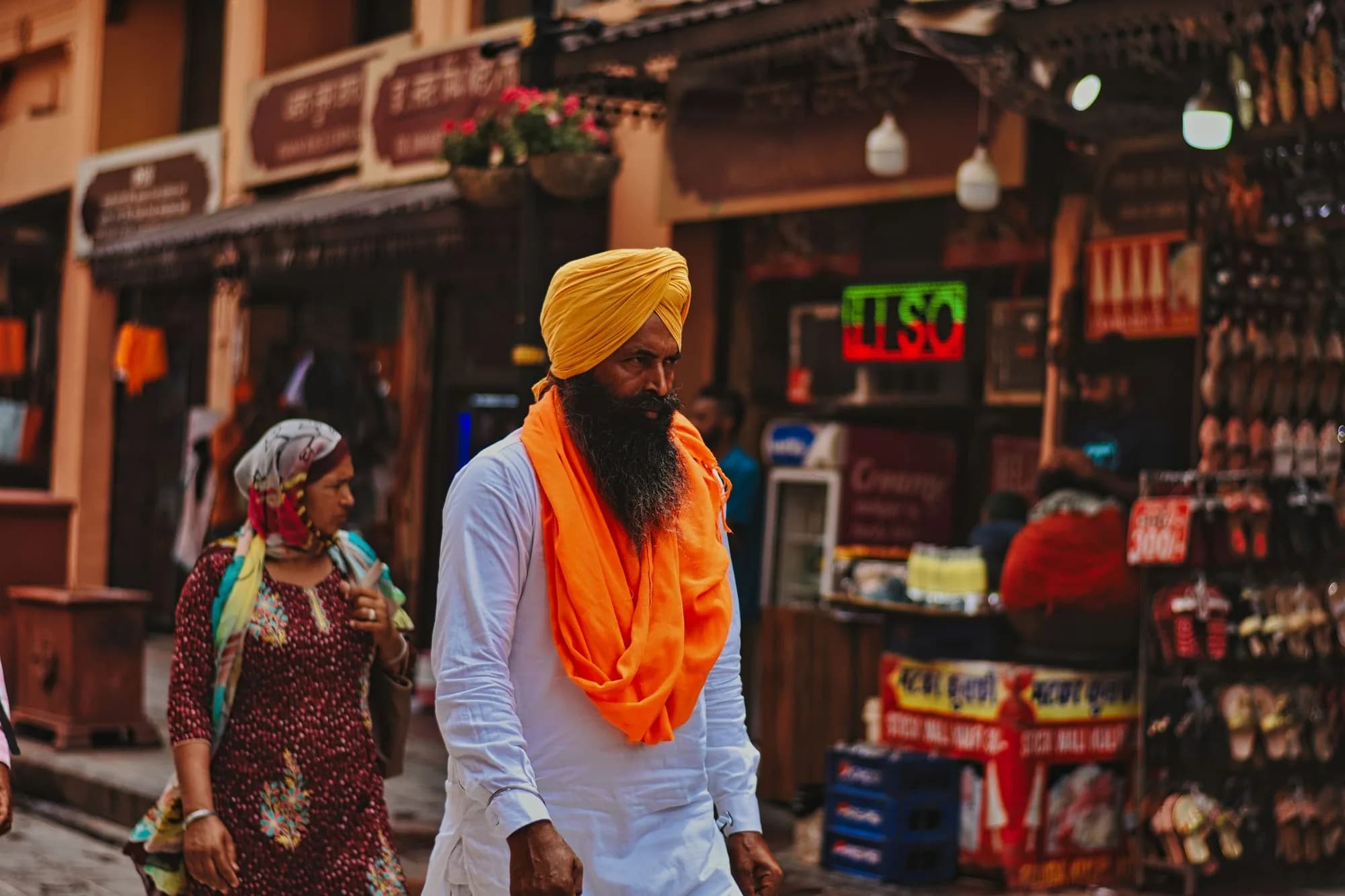
Jalandhar, Punjab, India
Wedding photography in Jalandhar
In short
Aavira Films is a wedding photography and cinematography studio available for weddings in Jalandhar. Here that often means a wedding built around relatives arriving from Canada, the UK or Italy: a morning Anand Karaj, a milni with a very large family on both sides, a doli and a reception at a palace on the GT Road — covered as photographs and as a film. It suits couples who want the whole extended family in the record, not just the couple.
- Region
- Doaba
- Ceremony
- Anand Karaj, morning, usually 8–11am
- Nearest airports
- Amritsar (ATQ) ~90km, Chandigarh (IXC) ~150km
- Seasons
- Oct–Mar, plus a July–August NRI cluster
On the ground
How weddings run here
Coverage
What we photograph and film in Jalandhar
Photography, cinematography, pre-wedding and destination coverage — each with the local detail that changes how it is planned.
- Anand Karaj coverage
- Milni and extended family groups
- Choora and maiyan at home
- Jaggo and sangeet
- Doli and vidaai
- Wedding photography
- Cinematic wedding films
- Reception coverage
- NRI and destination weddings
Wedding photography in Jalandhar
A Doaba wedding is a family reunion with a ceremony inside it. Coverage is weighted towards the people — the milni pairings, the visiting relatives, the grandparents who will see these photographs more often than anyone else.
See the photography workWedding cinematography in Jalandhar
For a family spread across three countries the film is how the wedding travels. That argues for clean ceremony audio, real speech from the people who came, and an edit that can be watched together before everyone flies home.
Open the film libraryPre-wedding shoots in Jalandhar
Often squeezed into the fortnight a couple is actually in the country together. The Doaba countryside, the GT Road villages and the city's older quarters all work; what matters most is being honest about how much can be done in one morning.
How pre-wedding shoots workNRI and destination weddings
Jalandhar weddings are frequently destination weddings in reverse — the family travelling home. Compressed schedules, more events per trip, and a strong case for delivering something while everyone is still together.
Destination wedding coverageVenues
Where weddings happen in Jalandhar
The kinds of places a wedding here actually takes place, and what each one asks of a photography and film team.
Marriage palaces on the GT Road
The dominant venue type, strung along the GT Road towards Phagwara and out on the Nakodar and Kapurthala roads. Lawn for the baraat, a large hall lit entirely with coloured artificial light, rooms upstairs, and parking for a guest list that arrives all at once.
City hotels around Model Town and the GT Road
Used for receptions and for housing visiting families for a fortnight. Reliable air conditioning — which matters a great deal for the July and August weddings — and controllable banquet lighting.
Gurdwaras across the city
Where the Anand Karaj happens. Bright, flat-lit marble halls, no flash, floor-level working positions, and a committee whose permission is worth arranging a week ahead.
Devi Talab Mandir and city temples
A fixture for Punjabi Hindu families' pre-wedding rituals. Working places of worship with their own rules and heavy footfall — coverage is discreet and permission-led, not a set-up.
Farm and lawn venues outside the city
On the Nakodar, Kapurthala and Hoshiarpur roads. Daylight, space for a full baraat and room for a two-day event on one site.
Family homes in the city and the villages
Choora, maiyan, sehra bandi and the doli. Often crowded with visiting relatives, which makes them warmer, louder and much harder to move through than the schedule assumes.
Logistics
Getting there, and getting around
FAQ
Planning a wedding in Jalandhar
The things worth settling before you book anyone to photograph a wedding here.
Half our family is flying in from Canada and the UK. What should we ask a photography team?
Three things. First, how they will cover the milni and the family groups — for relatives who have travelled a long way, that is the part of the wedding they are actually in, and it happens once. Second, whether they will shoot the informal days as well as the ceremonies; the get-togethers before the wedding are often where the visiting family is at its most relaxed. Third, what can be delivered while everyone is still in the country, because a first set of photographs or a short film seen together before people fly out is worth more than the same thing delivered months later.Why do so many Jalandhar weddings happen in July and August?
Because that is when school holidays in Canada and the UK let families travel. Doaba has a real second wedding season in the summer that most of Punjab does not, and those dates are chosen for the guest list rather than the weather. It is hot and it is monsoon season, so the practical adjustments are: ceremonies pushed earlier into the morning, more of the day held indoors under air conditioning, and an agreed wet-weather plan for the baraat that somebody has actually confirmed with the venue.How long does the milni take, and why does it matter for coverage?
In large Doaba families it can run well past the ten or fifteen minutes people expect, because the pairings go deep — the two fathers, then the mamas, the chachas, the taayas, the brothers-in-law — each garlanded and greeted in turn. It matters because it is unrepeatable and because it is the closest a wedding with relatives on three continents comes to a complete family portrait. It needs two positions: someone in close for the faces and the embraces, and someone wide enough to hold both families in one frame.Is Adampur airport useful for our guests?
Sometimes, but not reliably. Adampur has a small civil terminal about 25km from the city with a limited schedule that changes often, so it is worth checking whether a flight exists on your dates rather than assuming one does. Most guests use Amritsar, about ninety minutes away on the GT Road, or Chandigarh, about three hours. For long-haul arrivals Delhi is still common.Can we hold the ceremony in Jalandhar and the reception in another town?
Easily — Phagwara and Kapurthala are around twenty kilometres away and Ludhiana about sixty, so this is a normal Doaba arrangement. It does mean the day has two venues and two setups, which in practice means splitting the crew: one unit with the bride from the choora through the doli, another already at the reception venue lighting and testing the hall before guests arrive.What are the rules for photographing inside a gurdwara here?
The same as anywhere in Punjab, and they are not flexible. Heads covered, shoes off, feet washed, no tobacco or alcohol on the premises, flash off, and nothing and nobody positioned above the level of the Guru Granth Sahib — which rules out ladders, raised tripods and any drone over the darbar. A crew works seated from the floor and does not cross between the sangat and the Palki during kirtan. Permission from the gurdwara committee should be arranged in advance rather than requested at the gate.