Region
Wedding photography in Punjab
In short
Aavira Films is an Indian wedding photography and cinematography studio, available for weddings anywhere in Punjab. Across the state that usually means an early choora and maiyan at home, an Anand Karaj that has to finish inside the morning diwan, langar, an afternoon doli and a reception at a marriage palace — covered as a photo story and as a wedding film. It suits couples who want the rituals recorded properly and in order, not rearranged for the camera.
- Regions
- Majha, Doaba and Malwa
- Ceremony
- Anand Karaj, morning diwan, usually 8–11am
- Peak season
- Late Oct–early Dec, and late Jan–Mar
- Main airports
- Amritsar (ATQ) and Chandigarh (IXC)
On the ground
How weddings run here
Coverage
What we photograph and film in Punjab
Photography, cinematography, pre-wedding and destination coverage — each with the local detail that changes how it is planned.
- Anand Karaj coverage
- Wedding photography
- Cinematic wedding films
- Choora, maiyan and jaggo
- Milni and baraat
- Doli and vidaai
- Reception coverage
- Pre-wedding portraits
- Destination weddings
Wedding photography in Punjab
A Punjabi wedding day runs from before sunrise to well after dinner, and the two hardest hours of it — the choora in a small room at 5am and the doli in a car park at 2pm — are the two nobody plans for. Coverage here is built around that, not around a package of hours.
See the photography workWedding cinematography in Punjab
The film is carried by sound: the lavaan and the kirtan in the darbar, the boliyan at jaggo, what a father says at the doli. Recording that cleanly inside a gurdwara — no flash, no rigs, no elevated positions — is a discipline of its own, and it is what makes the difference between a Punjabi wedding film and a montage.
Open the film libraryPre-wedding shoots in Punjab
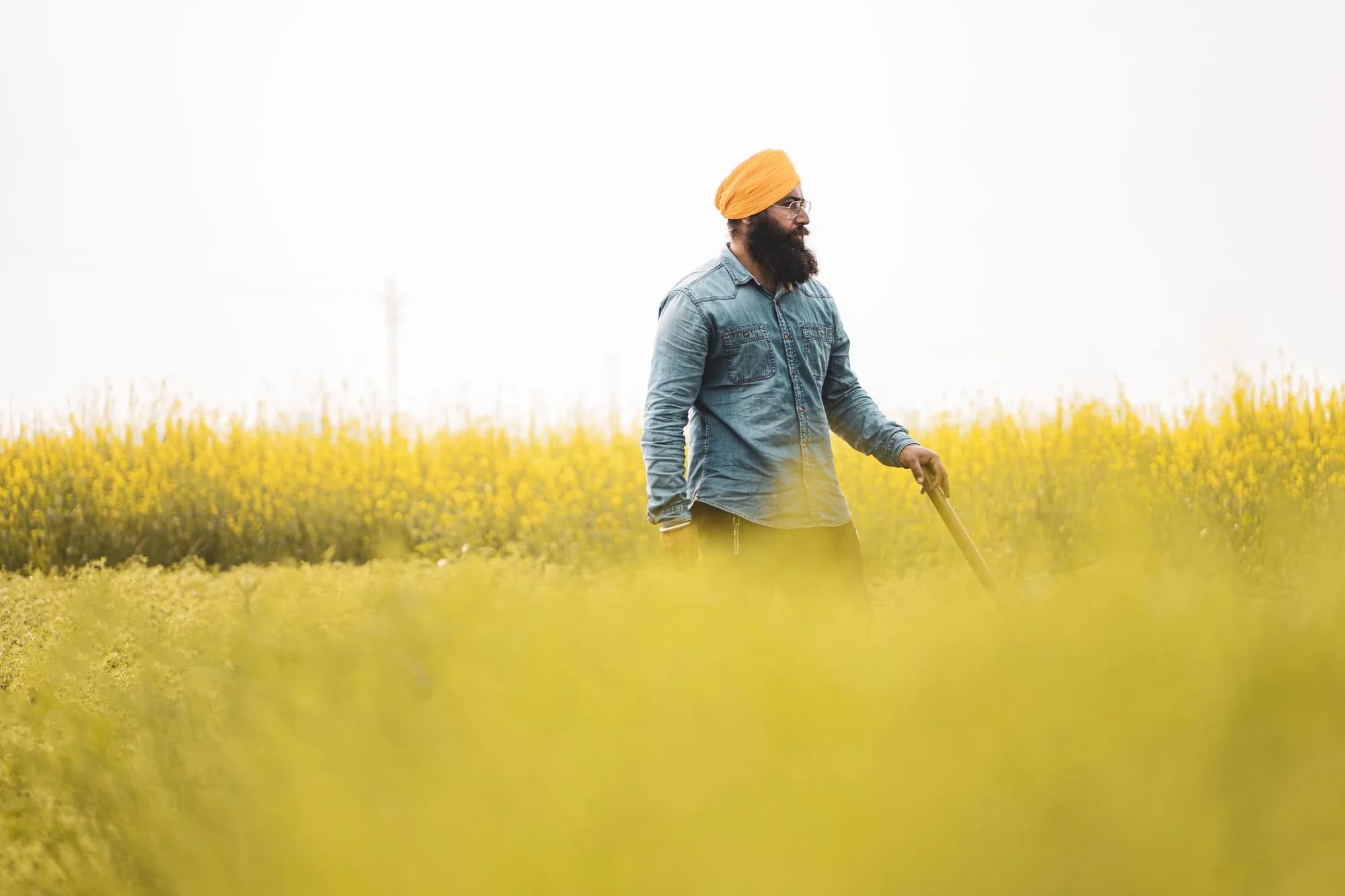
February and March give you mustard fields; the winter fog gives you soft, quiet light in the early morning; the historic quarters of Amritsar, Patiala and Kapurthala give you architecture. Most public sites and gardens need permission for a shoot, which is worth arranging well before the day.
How pre-wedding shoots workDestination weddings in Punjab
A large share of Punjab weddings are already destination weddings for the family — flying in from Canada or the UK for a fortnight in December. That changes the brief: more relatives to cover, less time on the ground, and a delivery timeline that ideally lands while everyone is still together.
Destination wedding coverageVenues
Where weddings happen in Punjab
The kinds of places a wedding here actually takes place, and what each one asks of a photography and film team.
Marriage palaces
Punjab's signature venue: a walled compound on a bypass or state highway with a lawn for the baraat, a large chandeliered hall and rooms upstairs. Fast to run, close to the villages guests travel from, and lit almost entirely with coloured artificial light — the hall needs to be metered and balanced before the baraat arrives, not during it.
Gurdwara complexes
Where the wedding itself happens. Bright, marble-heavy, flat-lit darbar halls with no flash permitted and strict rules about where a person may stand. Larger complexes have their own committee and their own permissions process.
Hotel banquets in the cities
Amritsar, Ludhiana, Jalandhar, Patiala, Mohali and Chandigarh all have a hotel belt. Predictable power, air conditioning, rooms for the family and a controllable reception space — at the cost of the open-air feel a lawn gives.
Farm and lawn venues
On the outskirts of most cities and along the highways. Genuinely good light through the afternoon, generous space for a baraat, and usually a long unlit walk between the lawn and the hall that needs planning for once the sun goes.
Family homes and havelis
The choora, maiyan, sehra bandi and the doli mostly happen here, not at the venue. Small rooms, one window, crowded doorways — the least glamorous and most important location of the day.
Resorts on the GT Road
Between the major cities, used when guests are arriving from several districts at once. Convenient for a two-day event where everyone stays on site.
Logistics
Getting there, and getting around
FAQ
Planning a wedding in Punjab
The things worth settling before you book anyone to photograph a wedding here.
Why do Punjabi weddings start so early?
Because the Anand Karaj is performed in the presence of the Guru Granth Sahib during the morning diwan, and is completed before the middle of the day. Most ceremonies are set between about 8am and 11am. Everything else stacks backwards from there: the choora is often before sunrise, maiyan follows, and the milni happens minutes before the ceremony. A photography team that is not on site by first light has already missed a third of the wedding.What are the photography rules inside a gurdwara?
Head covered, shoes off, feet washed, no tobacco or alcohol on the premises, and nothing and nobody positioned above the level of the Guru Granth Sahib — so no ladders, no raised tripods, no standing on furniture and no drone over the darbar. Flash is off. Movement between the sangat and the Palki during kirtan is avoided. Many gurdwaras want the committee's permission in advance, and the larger historic ones effectively always do. It is worth asking your family to make that request a week ahead rather than at the gate on the morning.When is wedding season in Punjab?
Two dense windows: late October to early December, and late January through March. December fills earliest because that is when families from Canada, the UK and elsewhere are in the country. Mid-June to August is hot and wet and generally avoided, with the exception of Doaba, where summer weddings are scheduled around visiting relatives regardless of the weather. If your date falls in the December window, book photography much further ahead than you would for a February wedding.Does winter fog actually affect a wedding shoot?
Yes, in two ways. Practically, from late December into January the fog on the plains can hold until mid-morning, delay flights at Amritsar and Chandigarh and slow every road between towns — so a crew travelling in on the morning of the wedding is a bad plan in that window, and staying the night before is a good one. Visually it is a gift: it makes soft, even, low-contrast light that portraits and doli frames look beautiful in, while flattening wide venue shots.Can we fly a drone at a wedding in Punjab?
It depends entirely on where the venue is. Punjab has a long international border and several cantonments, and airspace near a border or a defence installation is restricted, as is the airspace around Amritsar and Chandigarh airports. The operator has to check the current DGCA airspace map and hold whatever authorisation applies; permission from the venue is not the same thing. Nothing flies inside or over a gurdwara darbar under any circumstances.We are getting married in one town and the reception is in another. Is that a problem?
It is normal in Punjab and it is manageable, but it changes the crew. Most Punjabi city pairs are two to three hours apart, so a single team either travels with the doli and misses the reception setup, or splits. The practical answer is usually two units for that day: one that stays with the bride from the choora through the doli, and one that is already at the reception venue lighting and testing the hall before anyone arrives.